One of the largest data centers in operation in Brazil: +9 MVA, 6 MW of IT load and 240 km of conductors executed by MSE.


Our approach to quality and commissioning delivers data centers ready to operate 24 hours a day, 7 days a week, 365 days a year.
At MSE Engenharia, we understand that speed of deployment, reliability and predictability are essential in data center projects. That is why we work in an integrated way, from the early engineering and planning stages through construction, assembly, testing and commissioning.
Installations
Electrical, HVAC, fire protection, automation and systems under a single point of responsibility. From the utility point of delivery to the rack, with our own team and integrated commissioning.
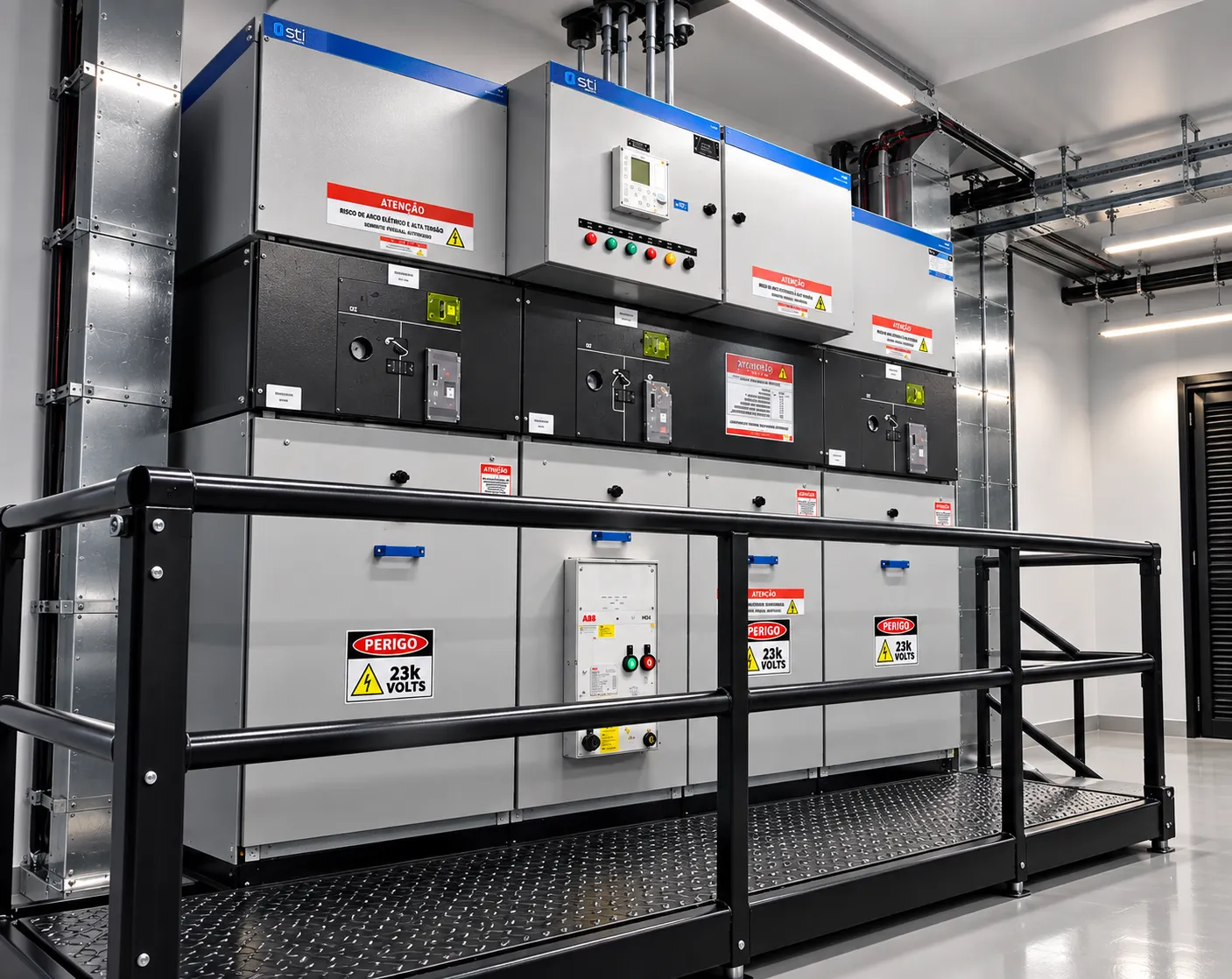
Substation, Medium and Low Voltage
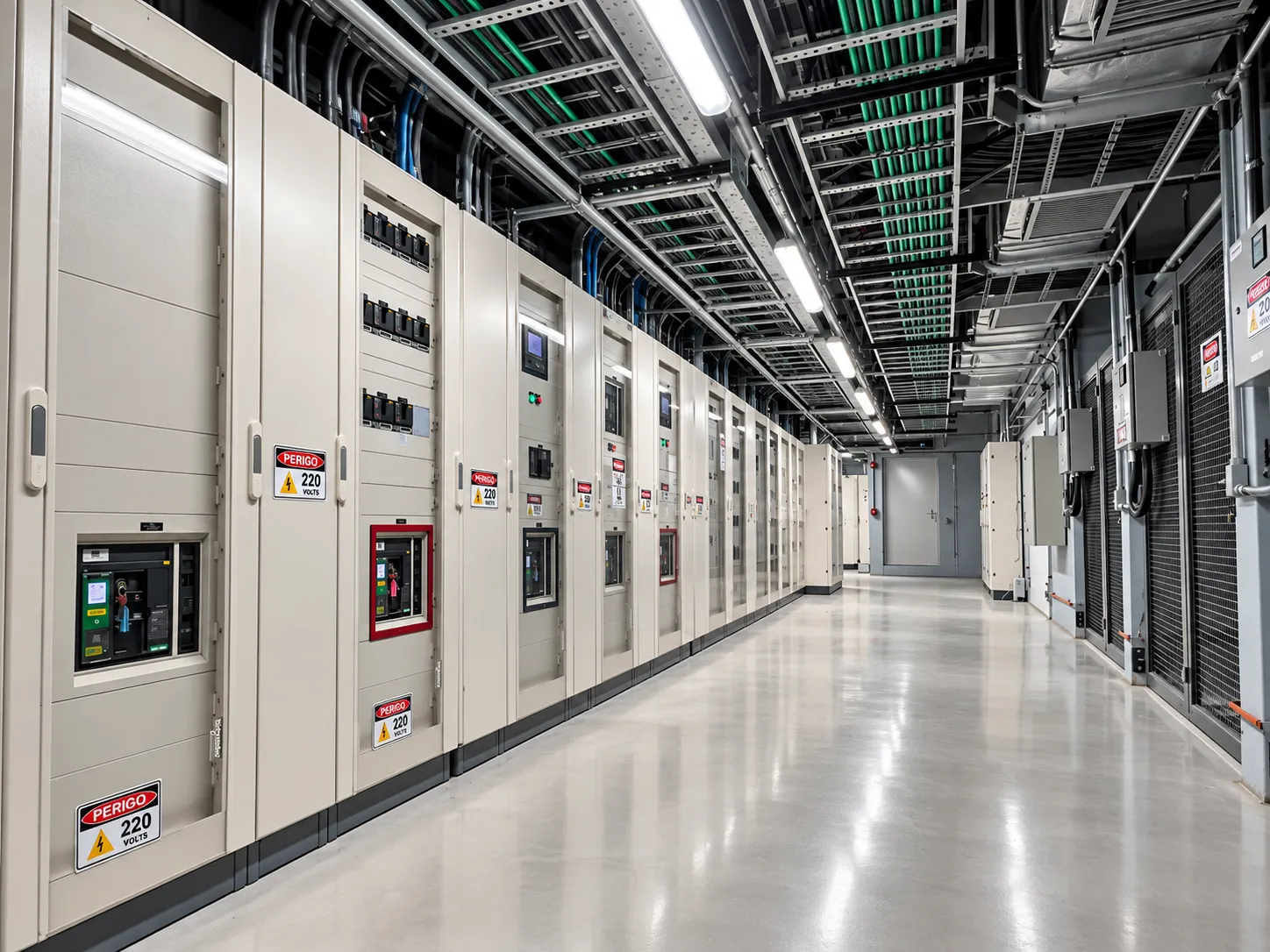
HV/MV substation, transformers, MV and LV switchboards, busway and conductors all the way to the data halls. Power distributed with circuit-by-circuit traceability.
Generators, UPS and Diesel
Generator sets, UPS, batteries and diesel storage and distribution. N+1 and 2N topologies, with no single point of failure.
E-Houses and Electrical Switchboards
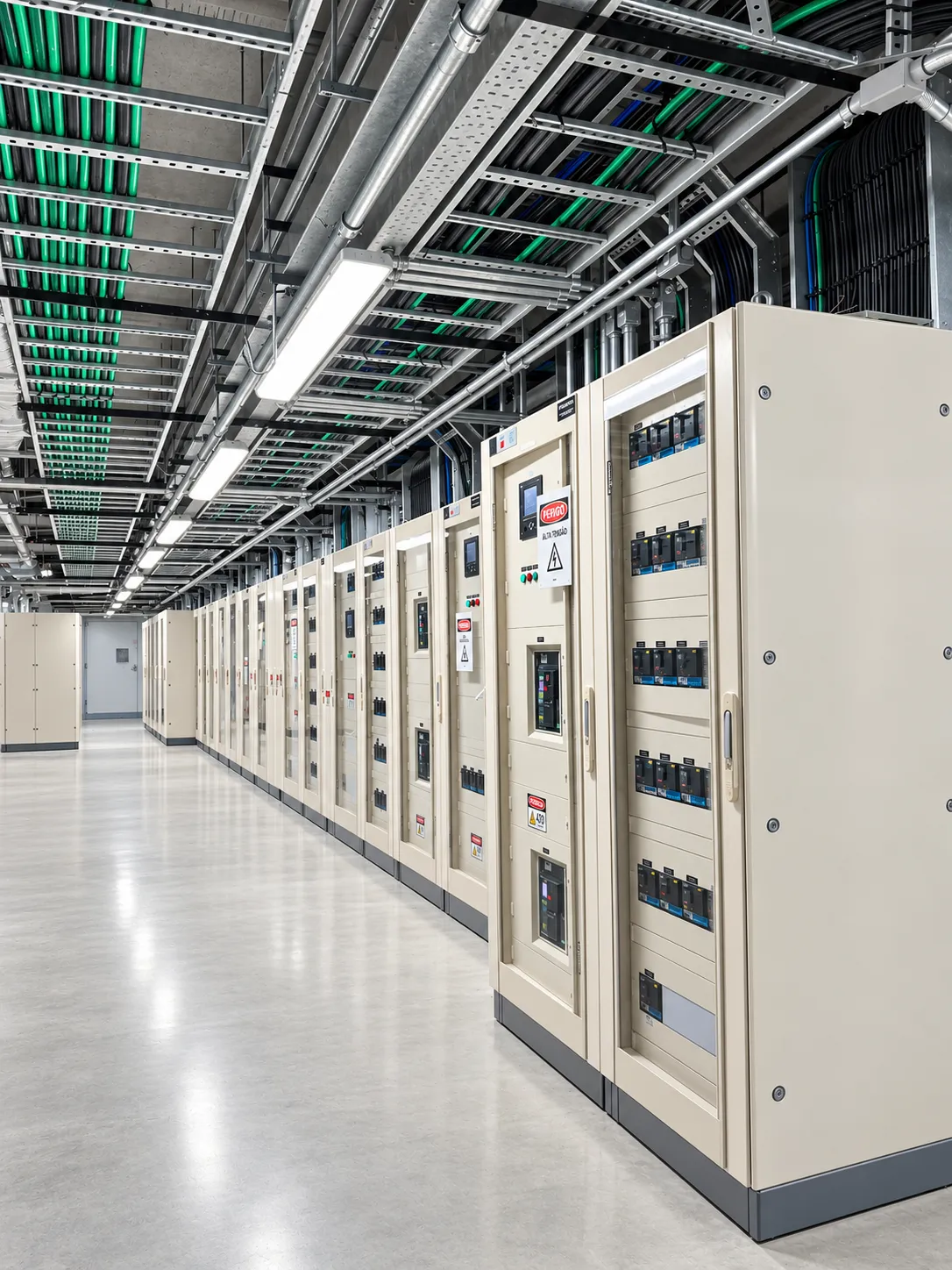
E-houses, switchboards, PDUs and STSs built and tested in our own factory. They arrive on site ready to connect, shortening the path to first power.
HVAC and Chilled Water
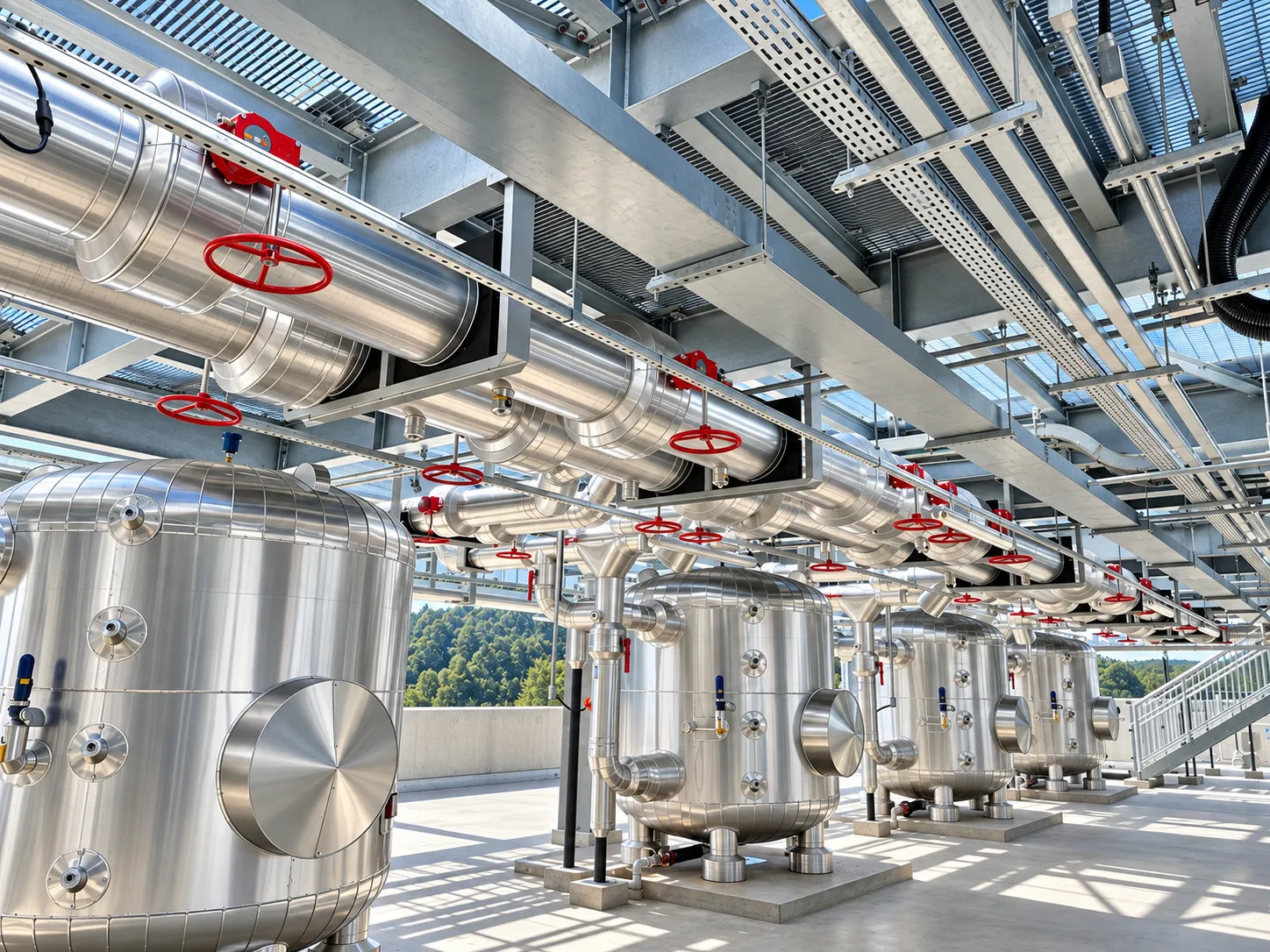
Chillers, CRAH units, containment aisles and chilled-water networks with hydraulic balancing. Cooling sized for high-density and AI racks.
Fire Protection
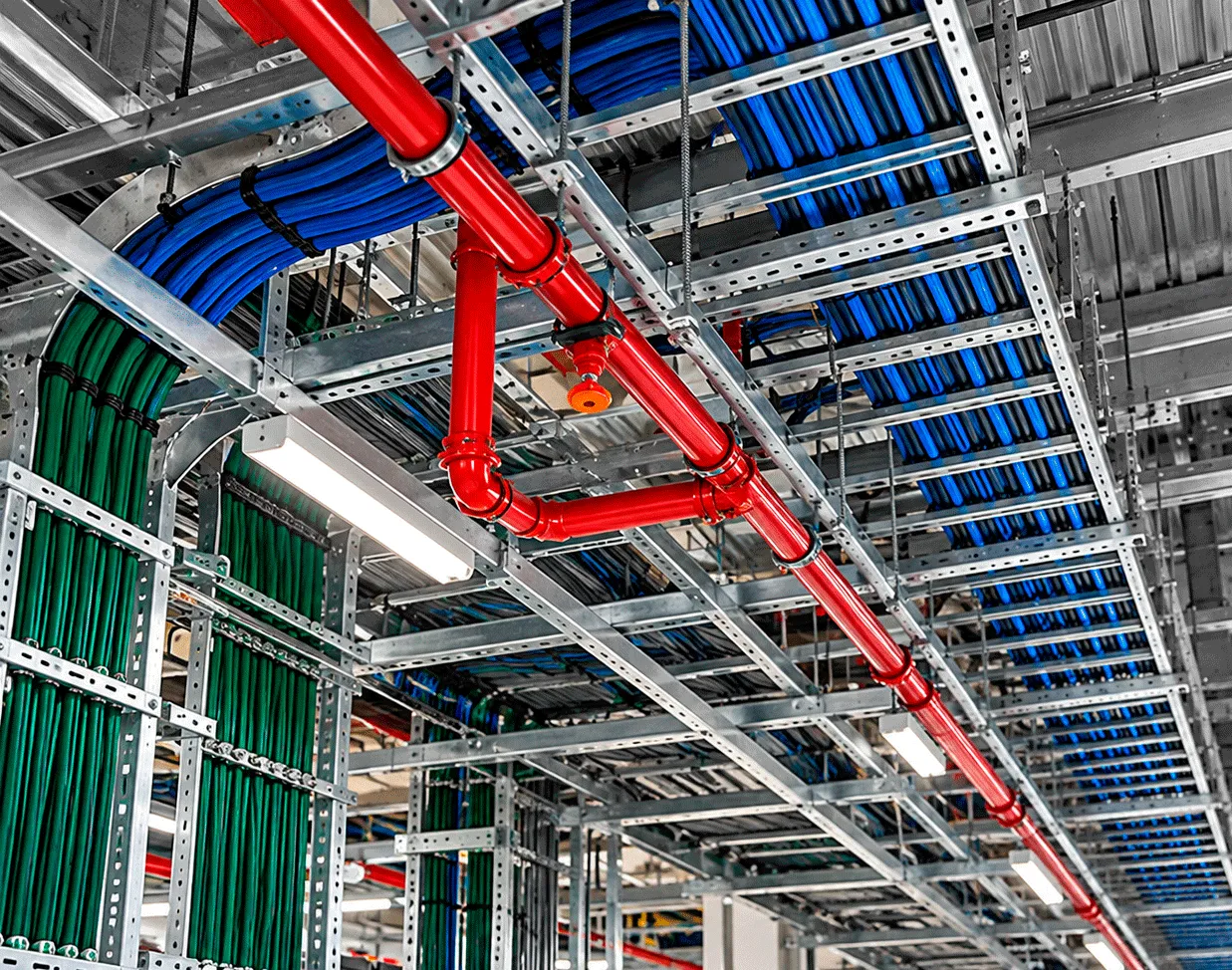
Sprinklers with pre-action valves, hydrants, pumps and piping networks. Protection against accidental discharge inside the data halls.
Detection and Gas Suppression
Early aspirating smoke detection, fire alarm systems and clean-agent suppression. Fire is identified and contained before it reaches the IT equipment.
Automation and Monitoring
Integrated PLC, BMS and EPMS, with relay parameterization and real-time supervision of power, cooling and alarms.
Electronic Security and Cabling
CCTV, access control, perimeter alarm and structured cabling in accordance with TIA-942 and TIA-568.
Infrastructure and Cable Trays
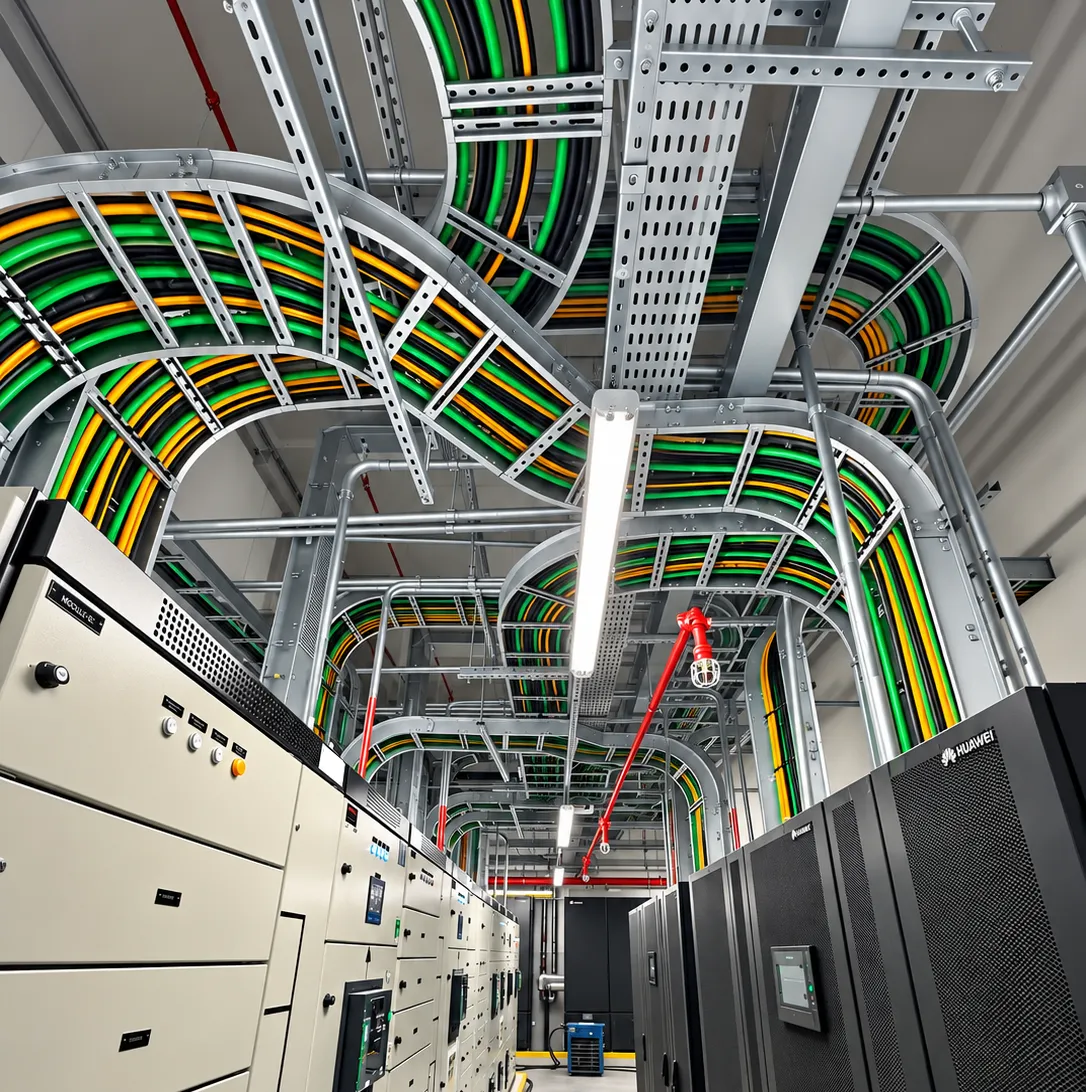
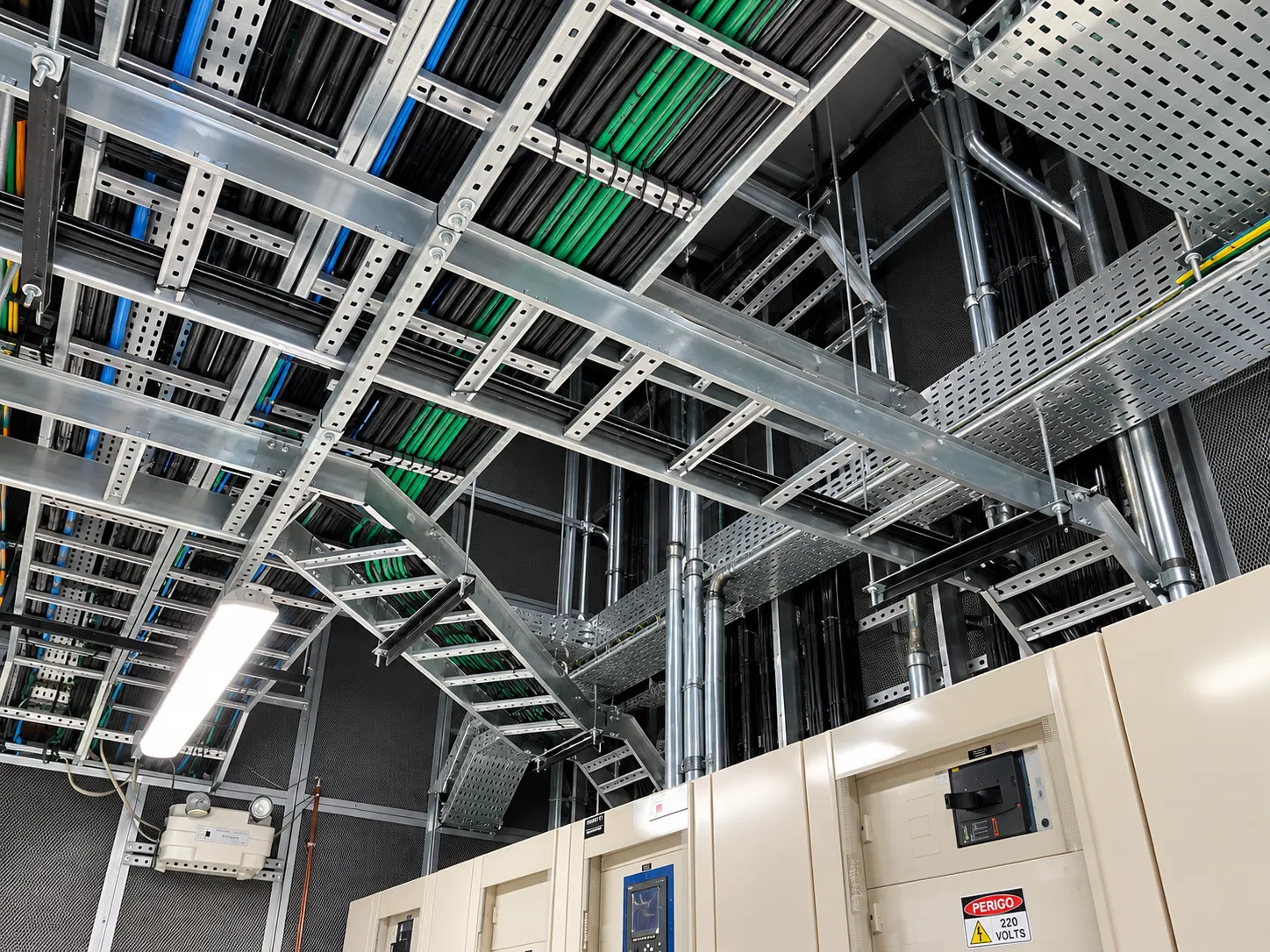
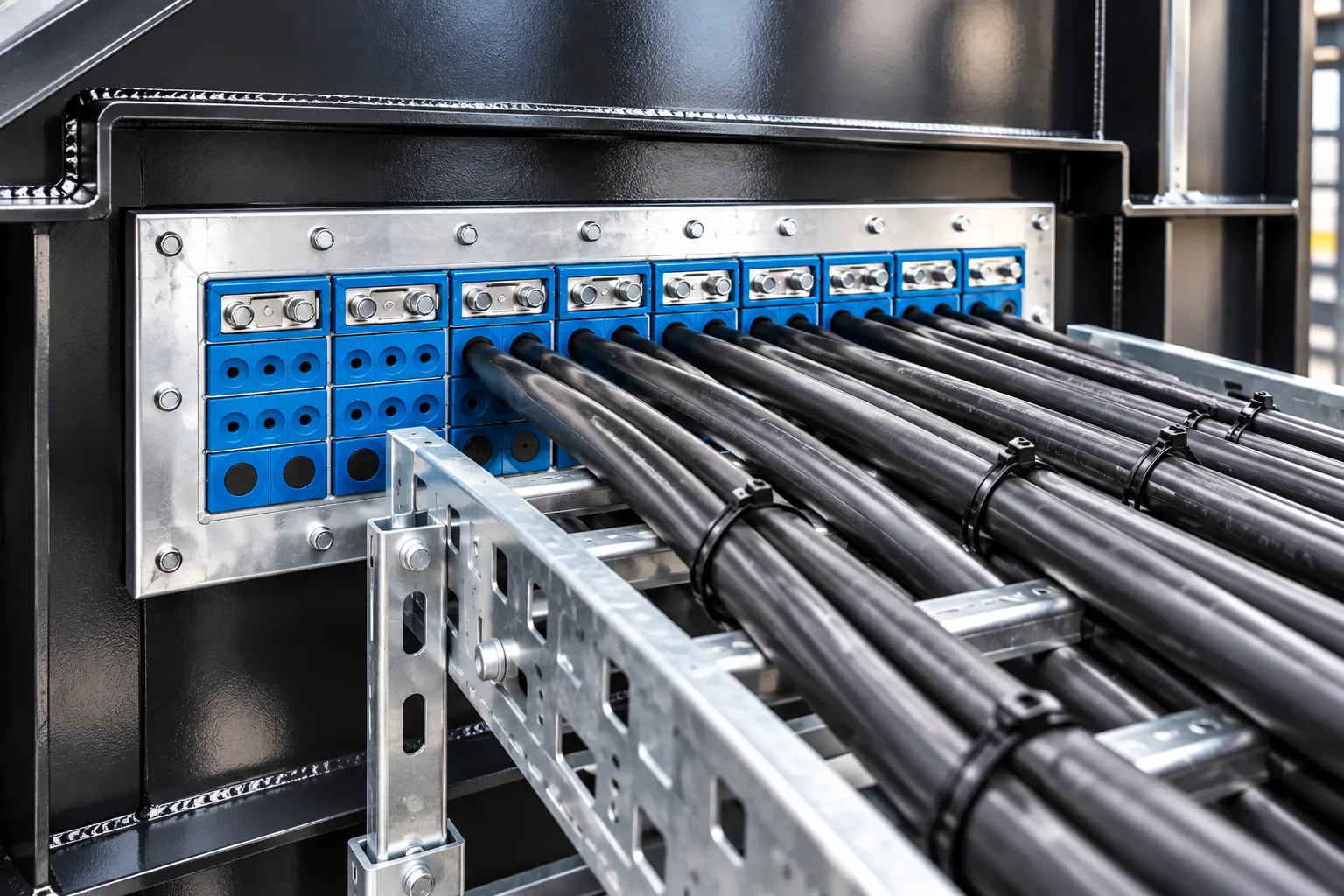
Cable trays, ladder racks, channels, baskets and conduit runs sized for the data halls. Routes separated by voltage and system, ready for expansion without rework.
Tier III Certification
Experience in Tier III data centers, with concurrent maintainability and redundant paths. Documentation, tests and as-built prepared for Uptime Institute certification.
L1–L5 Commissioning
Current injection, arc flash, selectivity and integrated tests from level 1 to 5. Redundancy proven before first power.
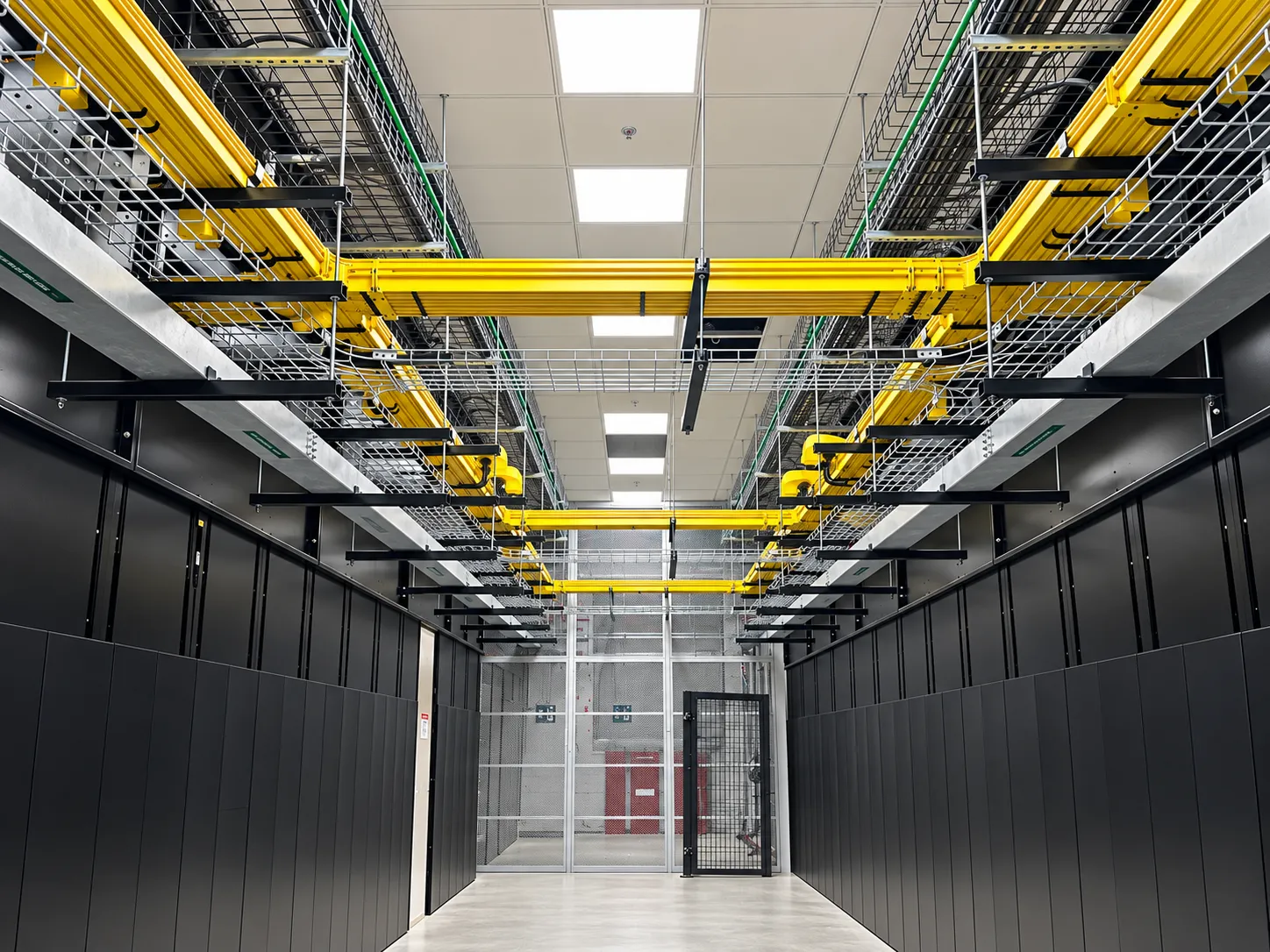
Building a data center is not a civil works project with equipment inside. It is a project in which power, cooling and network define the schedule, and in which any mismatch between design and execution becomes an availability risk. That is why choosing a data center construction company with in-house engineering changes the outcome.
The work begins with the conceptual study, which defines capacity in MW, density per rack, electrical topology and cooling strategy. Then come basic design, detailed design and the issue of construction documents. Only then do earthworks, foundations, structure, electrical rooms, substation, diesel system, cooling and network come in.
A mid-sized facility usually takes 12 to 24 months between concept definition and energization. What delays projects most is not the civil works: it is the long-lead equipment, such as transformers, generators, chillers and UPS. Specifying these items during the design phase is what protects the schedule.
Cost is driven by installed electrical power and by the level of redundancy, not by built area. A 5,000 m² hall with 2 MW and a 5,000 m² hall with 10 MW are completely different projects. The cooling solution and the power infrastructure available at the site also weigh heavily.
The Tier classification, also written as Tier II, Tier III and Tier IV, describes how well the facility withstands failure and maintenance without stopping. A Tier 3 data center requires that any component can be maintained without shutting down the load, which means redundant power and chilled-water paths. Tier 4 requires fault tolerance, with independent systems. In Brazil, Tier 3 is the most requested level for colocation and mission-critical projects. The higher the level, the greater the impact on layout, substation and cost.
Hiring the designer, the builder and the installer separately looks cheaper on paper. In practice, it creates gray areas between contracts, and that is where rework and delays appear. In the turnkey model, design, construction, assembly and commissioning stay under a single point of responsibility.
We develop solutions for data centers,
from concept to IFC and from construction to commissioning,
with proven Tier III and first power on schedule.

HV/MV substation, transformers, medium- and low-voltage switchboards, busway, generators, UPS and distribution down to the racks — with circuit-by-circuit traceability and commissioning before first power.
Yes. Chilled water, chillers, CRAH units, containment aisles, pre-action sprinklers, aspirating smoke detection and clean-agent suppression, all by the same in-house team.
They are five levels of testing, from factory inspection to integrated tests under load. Each system is validated before energization, proving N+1 or 2N redundancy.
Yes. They leave our own factory tested and arrive on site ready to connect, reducing interfaces and shortening the path to first power.
Yes. Hall expansions and system upgrades are carried out with a work plan that preserves the availability of the existing operation.

